
Running a Sex Offender Check in Effingham County
The Georgia Bureau of Investigation and Georgia Crime Information Center manage the statewide Georgia Sex Offender Registry under O.C.G.A. §42-1-12. The Effingham County Sheriff maintains accurate local registrant information and handles local registration questions. Search the statewide registry and the sheriff-linked local interface together because each offers a different route into the same public-safety process.
A name search works best with the full legal name. A place search can use an address, city, county, ZIP code, and available radius. Check the listed registration county, compliance or status field, last verification, and profile update before relying on a result. GBI warns that information comes from other agencies and changes often, so the registry cannot guarantee that every entry is complete or current.
Two Effingham County Registry Layers
The statewide search is the broad Georgia layer. The sheriff-linked interface is the local Effingham County route. A person searching near a municipal boundary should try the street address and a radius, then repeat the search by county or ZIP. A name-only query may miss the local context, while a map-only view can be misleading if the point or address has changed.
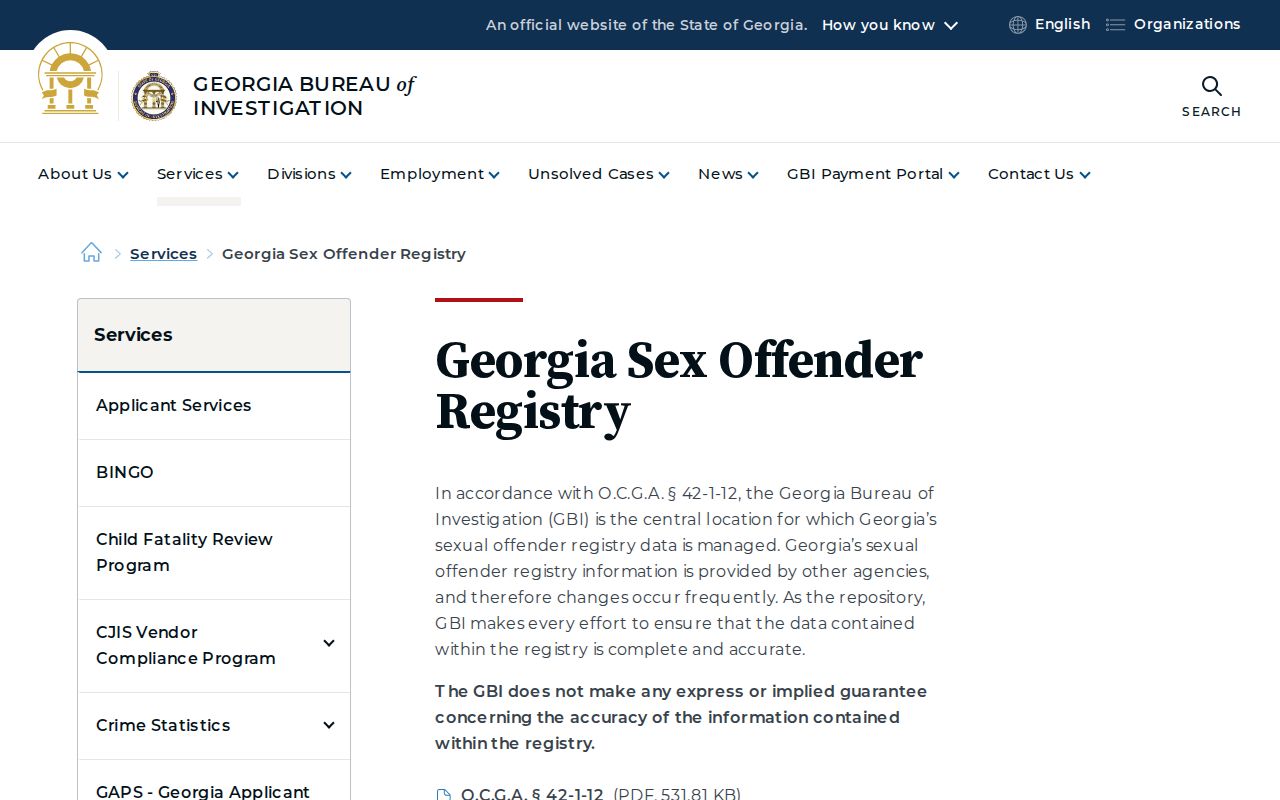
The GBI registry information page explains the state authority and public data resources.
Effingham County registration questions go to the Sheriff's Office at 500 West First Street in Springfield, 912-754-3449. The official information does not publish a registration fee or appointment schedule, so call before visiting.
Searching the Georgia Sex Offender Registry
The official Georgia Sex Offender Registry supports both identity and geographic queries. Read and accept its conditions before entering a narrow set of fields. Do not assume that no result means no duty exists, especially when spelling, address changes, or a border may affect the query.
- Open the official registry and read its disclaimer and conditions of use.
- Choose a name search or enter an address, city, ZIP code, Effingham County, and an available radius.
- Review the result list or map and compare enough identifiers to avoid a mistaken match.
- Open only the needed profile, check status and last-update fields, and verify a concern with the sheriff.
| Field | Type | Required | Use |
|---|---|---|---|
| First and last name | Text | Optional | Identity search; last name is the main filter |
| Offender type or status | Filter | Optional | Narrows results when offered |
| Address and city | Text | Optional | Starts a local geographic check |
| County and ZIP | Select or text | Optional | Choose Effingham or a local ZIP |
| Radius | Select | Optional | Uses distances offered by the live portal |
| Search or Reset | Button | Not applicable | Runs or clears the query |
The official search screen below shows why several fields can be combined.
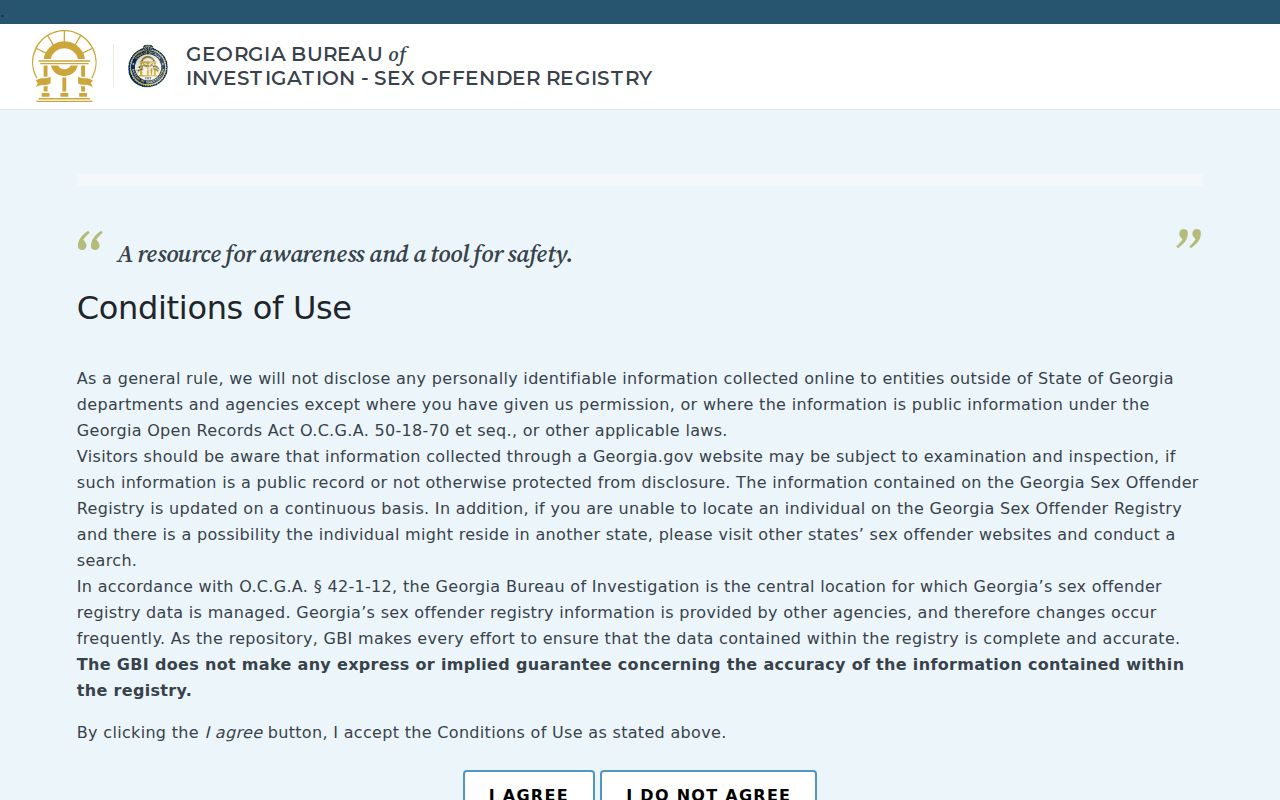
A narrow location query is useful for awareness, but the profile and sheriff verification supply the needed context.
Effingham County Border Searches
Effingham County sits close to Chatham County and the South Carolina line. A radius can cross a county boundary, while a county-only filter cannot. The National Sex Offender Public Website from the U.S. Department of Justice adds a multi-jurisdiction layer when an address, route, or family activity spans those borders.
The national landing page shown below is a search layer, not a replacement for local verification.
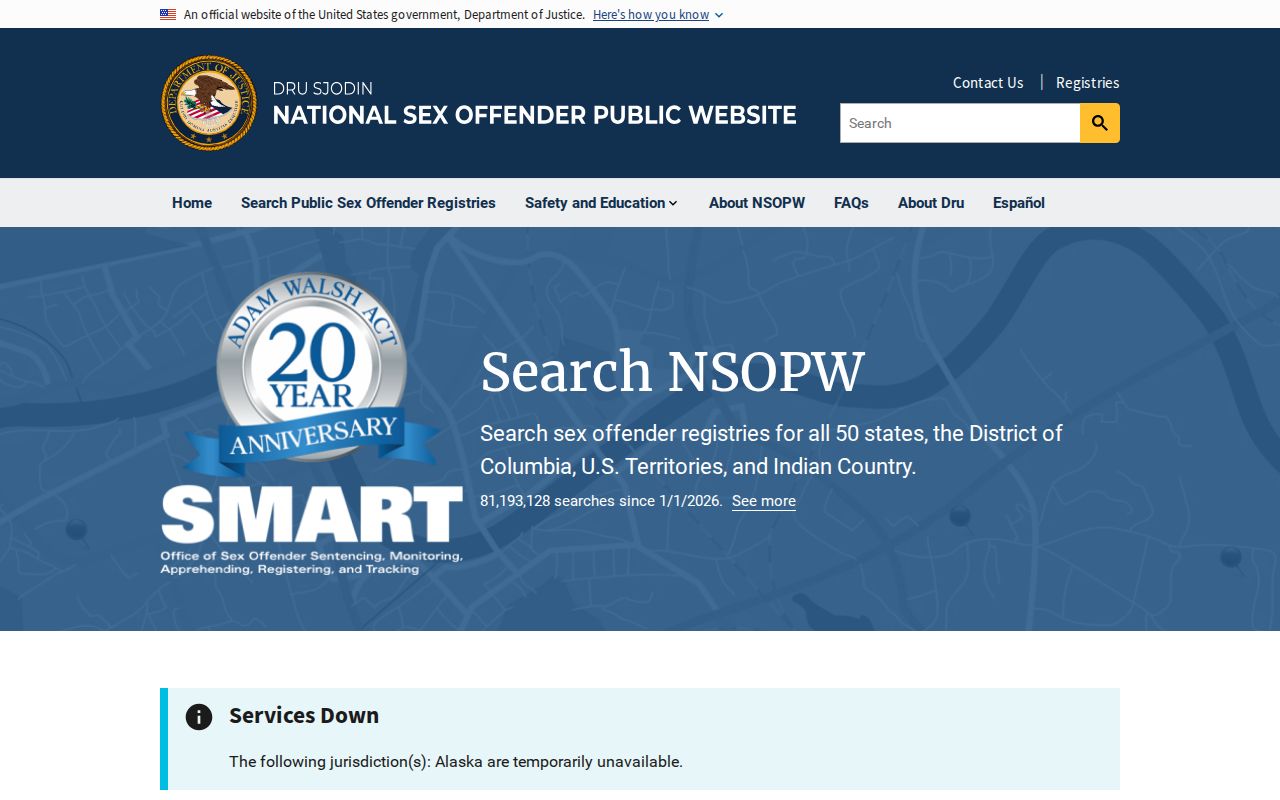
Use NSOPW to widen the map, then return to the relevant state registry and registering sheriff for the latest profile details. Different jurisdictions may publish fields and status terms in different ways.
What a Registry Profile Shows
An Effingham County registry profile can display identity, residence, offense, status, and risk information required by Georgia law. It is a pointer for a safety inquiry. It does not prove a new crime, current dangerousness, or conduct beyond the listed conviction and registration facts.
| Name and aliases | Published names used to distinguish the listed person. |
|---|---|
| Photo and description | Current image when supplied, plus physical descriptors, marks, scars, or tattoos. |
| Registered address | Residence information shown at the level Georgia law permits. |
| Offense information | Description, jurisdiction, conviction date, and statute when available. |
| Risk classification | Level I, Level II, Sexually Dangerous Predator, or a pending or legacy status. |
| Registration status | County, compliance information, verification or update details, and registering sheriff. |
| Other statutory fields | Vehicle, employer, or school information when publication is required. |
Match more than a name. Aliases and physical features help distinguish people, while the conviction and registration fields explain why the profile exists. Report a suspected error or noncompliance to the sheriff or GBI rather than trying to resolve it in person.
Effingham Registry Data Changes
GBI's caution about frequent changes matters in Effingham County. A move, new verification, corrected address, updated photograph, status review, or agency submission can change the public profile. The date shown on a record helps a reader judge when the listed information was last refreshed, but it should not be treated as a promise that every fact is current that day.
If a location seems wrong, preserve the profile URL or identifying details and call the sheriff. Do not visit the address or confront anyone. For immediate danger, call 911. The registry's job is public notice, while law enforcement determines whether a person has failed to comply.
Note: A registry listing reflects a registration duty tied to a prior case, not a new arrest or charge.
Registration Requirements and Levels in Georgia
Georgia uses risk classifications assessed through its own state process. These are not the federal SORNA Tier I, II, and III duration table. A generic ten-year, twenty-five-year, and life chart would misstate Georgia law. The offense, sentence completion, risk finding, statutory duty, and any court relief must be checked together.
| Classification | Meaning and verification | Duration |
|---|---|---|
| Level I | Lower relative assessed risk; public listing and annual sheriff duties generally apply | Statutory term, often life unless relief applies |
| Level II | Higher assessed risk; public listing and statutory verification apply | Generally life, subject to lawful relief |
| Sexually Dangerous Predator | Highest designation; reports in the birth month and six months later, with added monitoring rules possible | Life |
| Not yet classified | Assessment pending or legacy status; registration may still be required | Underlying statutory duty controls |
Registration duration and petition eligibility under O.C.G.A. §42-1-12 require an offense-specific legal check. The profile classification should be read as a Georgia risk label, not converted into a federal tier.
Effingham Sheriff Verifies Registrations
The Effingham County Sheriff is the local verifier and the right office for registration questions or suspected noncompliance. The sheriff maintains the local information that feeds the public system. The office is at 500 West First Street, Springfield, GA 31329, with the main number 912-754-3449.
Effingham County Sheriff's Office
500 West First Street
Springfield, GA 31329
912-754-3449
Give the profile name or identifier, the location at issue, and a concise description of the concern. Law enforcement can compare current registration records and decide whether follow-up is needed. Public users should not conduct their own compliance check.
Report Effingham Noncompliance Safely
Possible noncompliance may involve an address, status, or verification concern. Record the public profile details and contact the Effingham County Sheriff or GBI. A tip is not proof that a violation occurred. The agency must compare the report with nonpublic records and the requirements that apply to the registrant.
Call 911 only for an immediate threat or emergency. Routine questions belong with the sheriff. Do not publish copied profile data, organize a confrontation, or use a registry listing to pressure a household. Those acts can harm uninvolved people and interfere with official work.
Lawful Use and Community Notification
The Georgia registry exists for public awareness and safety planning. It can help a family understand listed addresses near a home, school route, park, or regular activity. It should be used with basic safeguards: read the whole profile, check its update fields, widen border searches through NSOPW, and send any concern to law enforcement.
Misuse is prohibited: O.C.G.A. §42-1-12 forbids using registry information to threaten, intimidate, or harass a registrant or household. Report concerns to the sheriff or GBI and never confront a listed person.
Registry information is also not a license to deny rights or services outside what law permits. A listing must never be treated as proof of a new offense. These limits protect public safety by keeping reports accurate, focused, and in official hands.